



So, your nonprofit is hoping to tackle a big project, but needs a lot of money to do so. Sounds like you need to run a capital campaign!
Capital campaigns are one of the most extensive types of fundraising campaigns, and they often involve a great deal of planning, preparation, and effort.
But, they can be highly effective…and not just at raising money.
Use this article as a guide to plan an impactful capital campaign of your very own that brings in funds, generates excitement, and builds a community.
What Is a Capital Campaign?

At its core, a capital campaign is a time-limited, goal-driven fundraising effort designed to raise a significant amount of money for a transformational project.
Unlike an annual campaign that raises funds for a nonprofit’s operations, capital campaigns are about big-time expansion and investment – projects like:
- Constructing or renovating a building
- Purchasing major equipment
- Exponentially expanding programs
- Kicking off a large-scale initiative
- Growing an endowment
Thus, the use of the word “capital.”
In terms of dollars, the amount nonprofits raise for capital campaigns varies depending on the size of the nonprofit and what it’s trying to accomplish. Typically, the goal of a capital campaign is going to be upwards of seven figures, though smaller nonprofits may tackle larger six-figure capital campaigns.
Capital Campaign Examples
To give you an idea of different types of nonprofit capital campaigns, let’s look at a few examples.
Building Renovation
Goal: $7 million
Purpose: Restore a historic downtown theater. Create new rehearsal and gallery spaces.
Building Expansion
Goal: $5 million
Purpose: Build a new library wing with flexible meeting rooms, children’s discovery spaces, and a technology hub.
Policy Advocacy Campaign
Goal: $3.5 million
Purpose: Launch a multi-year initiative to advance statewide policy reform in affordable housing.
Endowment Growth
Goal: $6 million
Purpose: Build an endowment to ensure long-term financial stability for a local social services nonprofit and provide predictable annual income for programs and staff.
Critical Equipment Acquisition
Goal: $2.8 million
Purpose: Purchase and install a new mobile medical unit and diagnostic equipment to expand healthcare access in rural areas.
Exciting projects, aren’t they?
Understanding what a capital campaign is only scratches the surface. The real question is why organizations take them on and what makes them worth the effort – because they’re not a small task to handle.
Why Capital Campaigns?
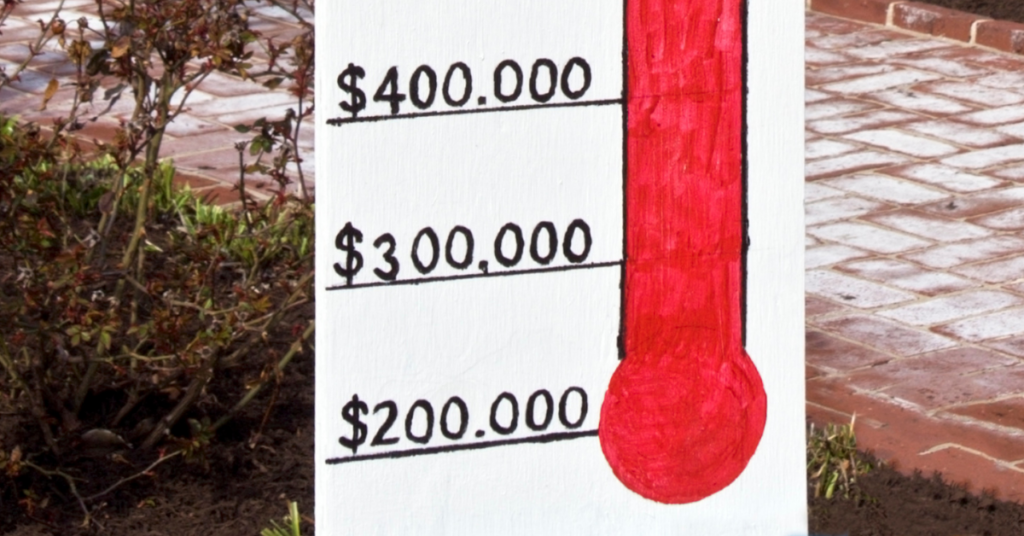
Capital campaigns matter because they do more than fund a project – they expand an organization’s capacity to deliver on its mission.
The capital campaign process requires nonprofits to:
- Clarify their vision and design a long-term plan for impact (i.e. transformation).
- Engage their most loyal and strongest supporters in meaningful conversations about the future.
- Build infrastructure – including systems, the right people, and necessary tools and resources – that can sustain growth after the campaign ends.
In doing so, the campaign itself becomes something of a strategic planning exercise that unites organizational leadership, the board of directors, key donors, and other stakeholders around a shared direction.
Nonprofit capital campaigns also deepen relationships in very meaningful and powerful ways. Donors who are invited to join a capital campaign often feel like they’re part of something bigger than a single gift. They feel like they’re helping to write the next chapter of the organization’s story!
That sense of ownership and partnership can strengthen donor loyalty and connection, inspire additional and future giving, and energize others involved in the capital campaign.
When done well, a capital campaign doesn’t just raise funds – it raises belief in what is possible. Imagine generating awareness, buy-in, community, and excitement around such a bold vision!
What’s Needed for a Capital Campaign?

It’s exciting to think about launching something that will transform your nonprofit.
But before you dive in, knowing what you’re signing up for is crucial. Capital campaigns demand serious time, energy, and coordination – and a team of people at the helm to steer everything in the right direction.
So let’s quickly look at the phases involved in a capital campaign and what elements go into a successful one.
3 Phases of a Capital Campaign
Capital campaigns require LOTS of planning and strategy. They can last anywhere from 18 to 36 months.
In fact, they include three specific phases:
- A planning phase that covers everything you need to prepare for a successful capital campaign: a feasibility study, a case for support, and more (see below).
- A quiet phase in which you secure about 70-80% of your goal through major gifts, often called leadership gifts.
- A public phase to build excitement among your supporters and community. This is when you’ll raise the rest of the money to meet (or exceed!) your goal.
5 Key Elements of a Capital Campaign
Even seasoned fundraisers sometimes underestimate the complexity of these types of campaigns, so here are the foundational elements every capital campaign needs:
1. Feasibility Study: Conducting a feasibility study helps you gauge donor capacity to give (think wealth evaluation), assess your case for support, and set a realistic financial goal based for your campaign. Usually, you’ll hire a consultant or agency to complete this step.
The team at MVP Advisors has the experience and skills required to conduct a feasibility study before you launch your capital campaign! We’ll guide you through the entire process, and we can even stick around to help with other elements of your campaign as needed. Set up a meeting to get started.
2. Case for Support: Your Case for Support is your “why” for this campaign. It outlines the problem, the proposed solution, and the impact – such as how lives will be changed through the capital campaign. It helps donors see the direct connection between their gift and the transformation it’ll help make possible.
3. Gift Range Chart: A gift range chart acts as the roadmap for your campaign, breaking down how many gifts you’ll need at different gift levels to reach your goal. (Hint: The top 10-20 donors will often account for 70-80% of your total campaign goal.)
4. Steering Committee: Setting up a steering committee means you’ll have a group of dedicated individuals focused on seeing your campaign through. You’ll need a campaign chair (or co-chairs) with influence and credibility, plus a committee of volunteers or ambassadors who can open doors and inspire giving.
5. Integration with Ongoing Fundraising: You don’t hit the pause button on fundraising for general operations during a capital campaign. It all happens simultaneously. Successful organizations will ensure their capital campaign complements – not dominates – other revenue streams like monthly giving, annual campaigns, giving days, and fundraising events.
7 Tips for a Successful Capital Campaign

You’ve learned what a capital campaign is, why it matters, and the key phases and elements you need to make one work. Now let’s talk about how to make your campaign succeed.
1. Start with a strong foundation: Before you announce anything publicly, make sure your organization is truly ready. That means your leadership, board, and staff are aligned around a shared vision and your systems (financial tracking, fundraising platform, donor database, communications, etc.) are solid. A capital campaign can expose weak spots in infrastructure, so solidify them early.
2. Secure leadership buy-in: The most successful campaigns have visible, enthusiastic leadership. Your executive director, board chair, and steering committee chair(s) must all be strong advocates who believe deeply in the vision. Their commitment inspires confidence and helps open doors to leadership gifts!
3. Don’t rush the feasibility study: It’s tempting to skip or rush this step, but the feasibility study is where you learn what’s realistic. Listen closely to donor feedback that you’ll get from the process. If your community isn’t ready to support the proposed goal, adjust your plan before you launch…don’t wait until the campaign stalls.
4. Lead with impact: Donors don’t give to buildings. They give to what happens inside of them. Whether you’re raising funds for a new facility, expanding a program, or establishing an endowment, keep your message focused on how lives will be changed because of the campaign. Storytelling and visuals are powerful tools that make the impact tangible.
5. Keep communication constant: Transparency builds trust, so share updates frequently, especially any successes (but it’s ok to share challenges too). When donors feel in the loop and the campaign is front of mind, they’re more likely to increase support or connect you with others who can help. Regular communication keeps the energy alive!
6. Celebrate milestones along the way: Don’t wait until you hit your final goal to celebrate. Recognize early achievements like the first major gift and reaching 50% of your goal. Highlighting progress builds momentum and keeps everyone motivated!
7. Keep gratitude front and center: A capital campaign is all about relationships. Expressing gratitude at every stage – before, during, and after the campaign – creates lasting goodwill. Handwritten notes, small gestures, and public recognition all go a long way in deepening donor trust and nurturing key relationships.
Remember, when you combine a solid plan with genuine heart and a focus on those you serve, your capital campaign turns into more than a fundraiser – it becomes a shared effort to bring something meaningful to life.
Getting Started
If your organization is dreaming of what’s next, maybe it’s time to start thinking boldly. With the right vision, the right plan, and the right people beside you, your capital campaign could become the spark that turns that dream into lasting impact.
MVP Advisors is here to help your nonprofit reach even your biggest goals. We’re a team of nonprofit professionals with experience in capital campaigns, feasibility studies, strategic planning, communications and content strategy, and much more.
Ready to get started? Set up a call or send us a note today.